Born at the Foothills of the
Eastern Himalayas
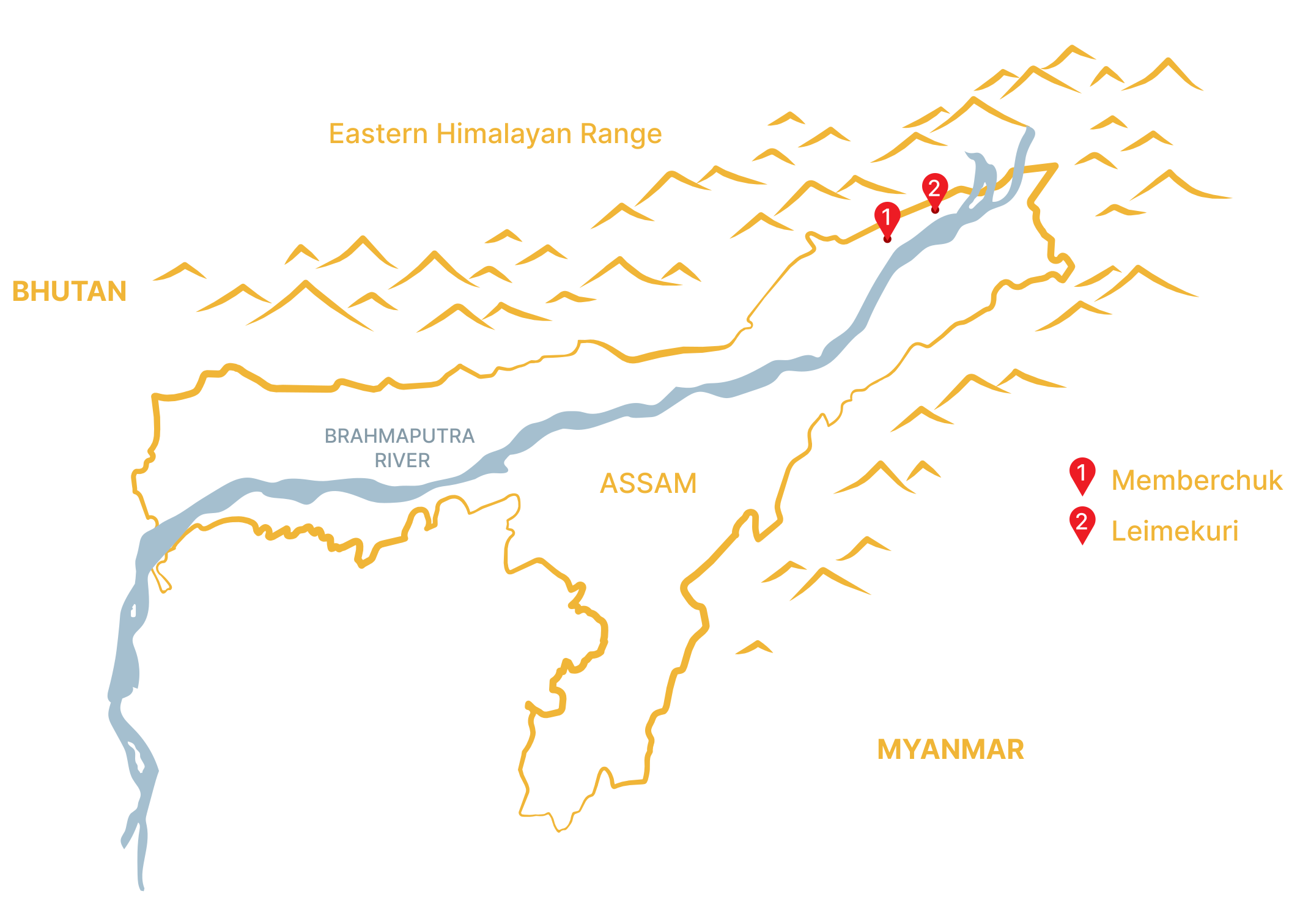
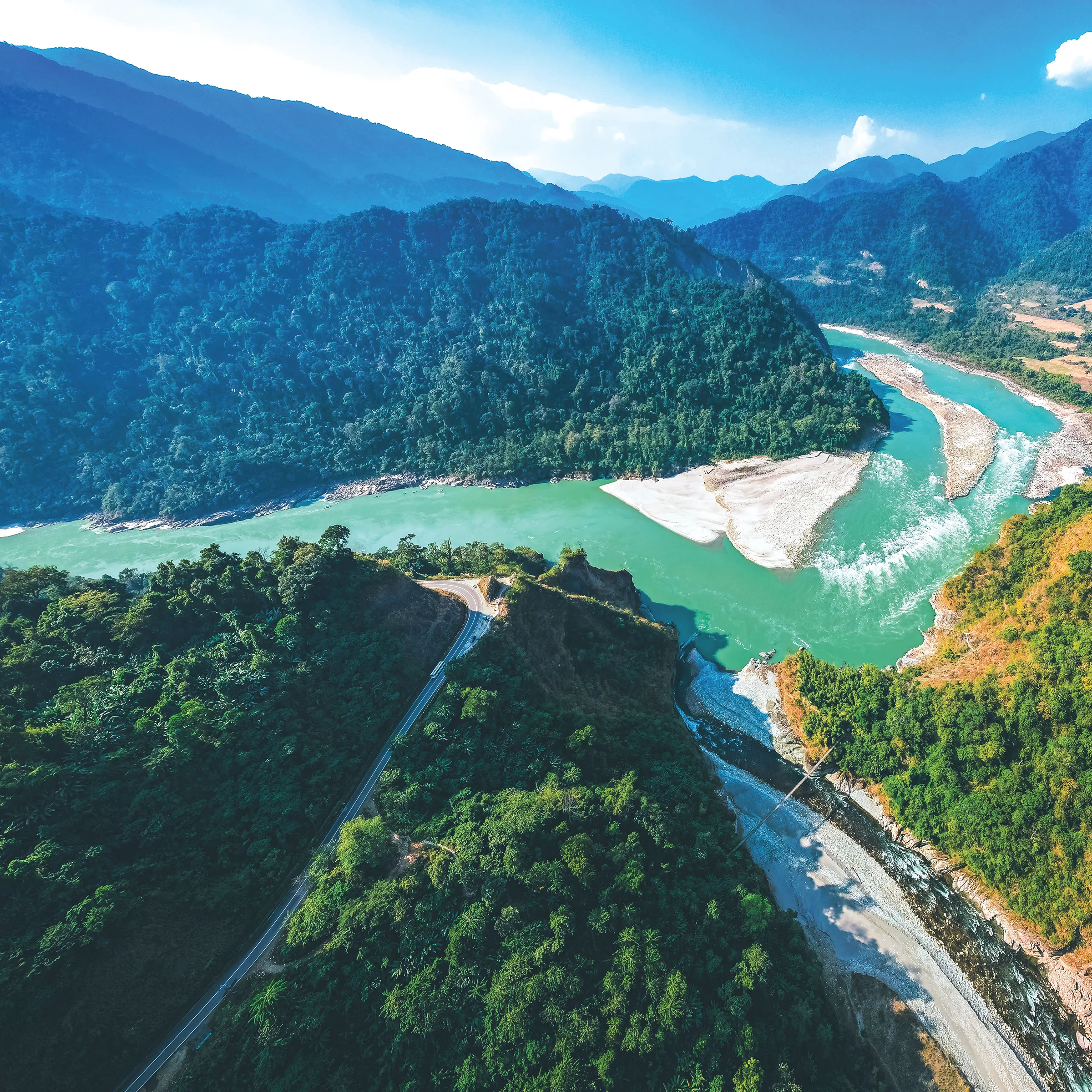
Po:ro Apong is born where the Eastern Himalayan foothills spill into Assam's Brahmaputra Valley.
From this landscape emerges a living library of flavour—60+ forest botanicals, each shaped by soil, climate and time. Herbs are gathered from the mountains; rice rises from the river's alluvial fields.
Every year the valley resets itself—flood, monsoon, heat and generous humidity—creating one of India's richest biodiversities.
Together, these forces compose a natural signature that cannot be replicated elsewhere: the Brahmaputra written into aroma and taste. For generations, the Mising community has lived to the river's rhythm, turning landscape into language—and language into Po:ro Apong.
& the Herb collectors
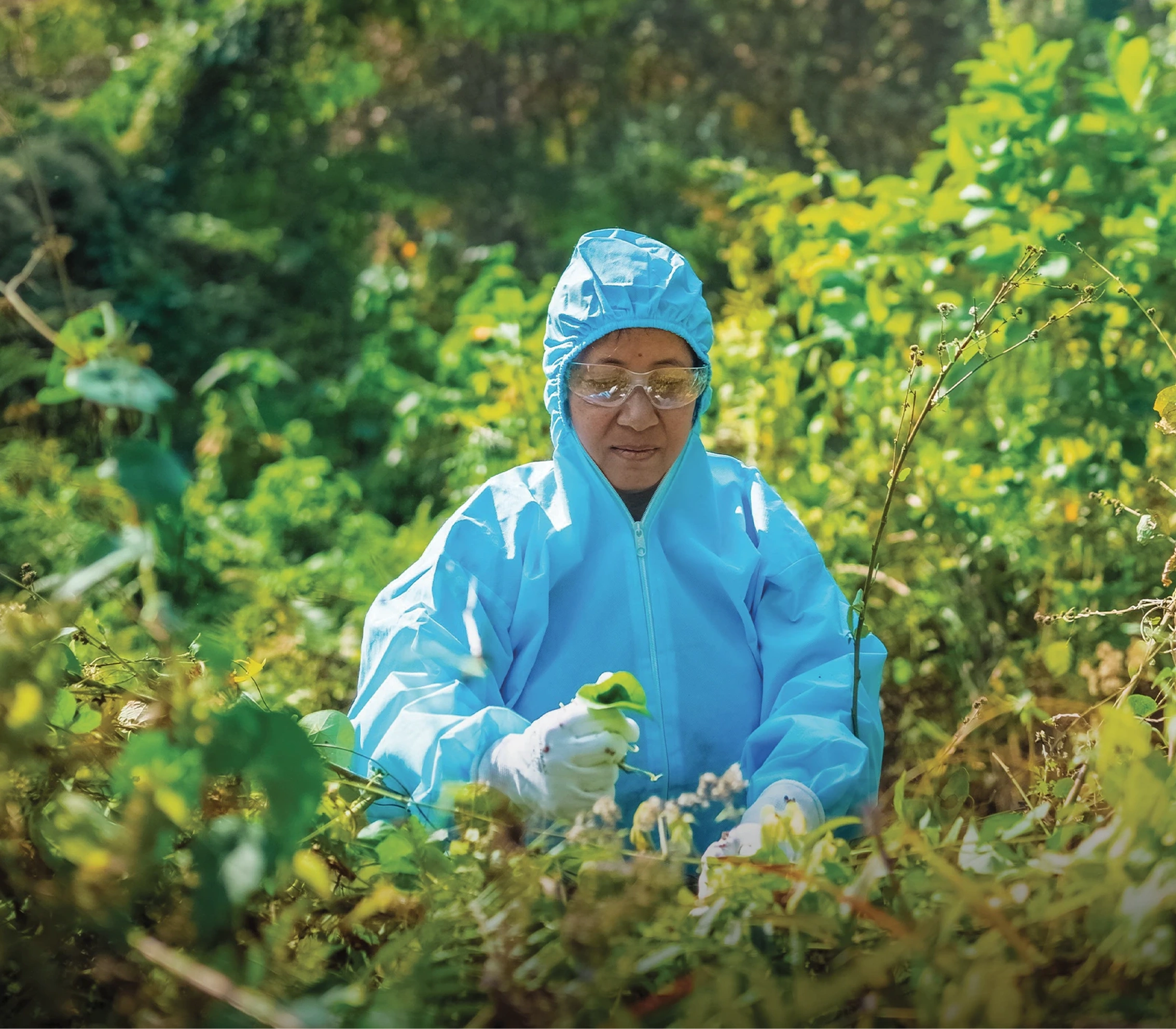
Each season begins in the forest at the foothills of the Himalayas.
Women trained in botanical knowledge enter the surrounding landscape to gather what the year allows. They collect with restraint, selecting from more than sixty forest botanicals based on smell, maturity, texture, and memory.
The forest decides what is available.
The collectors decide what should be taken and what should be left behind.
The Brewmaster’s MAGIC
The gathered botanicals are handed to the women brewmasters.
There is no recipe to follow. Proportions are decided anew every season, based on climate, humidity, the character of the herbs, and the brewmaster’s accumulated experience.
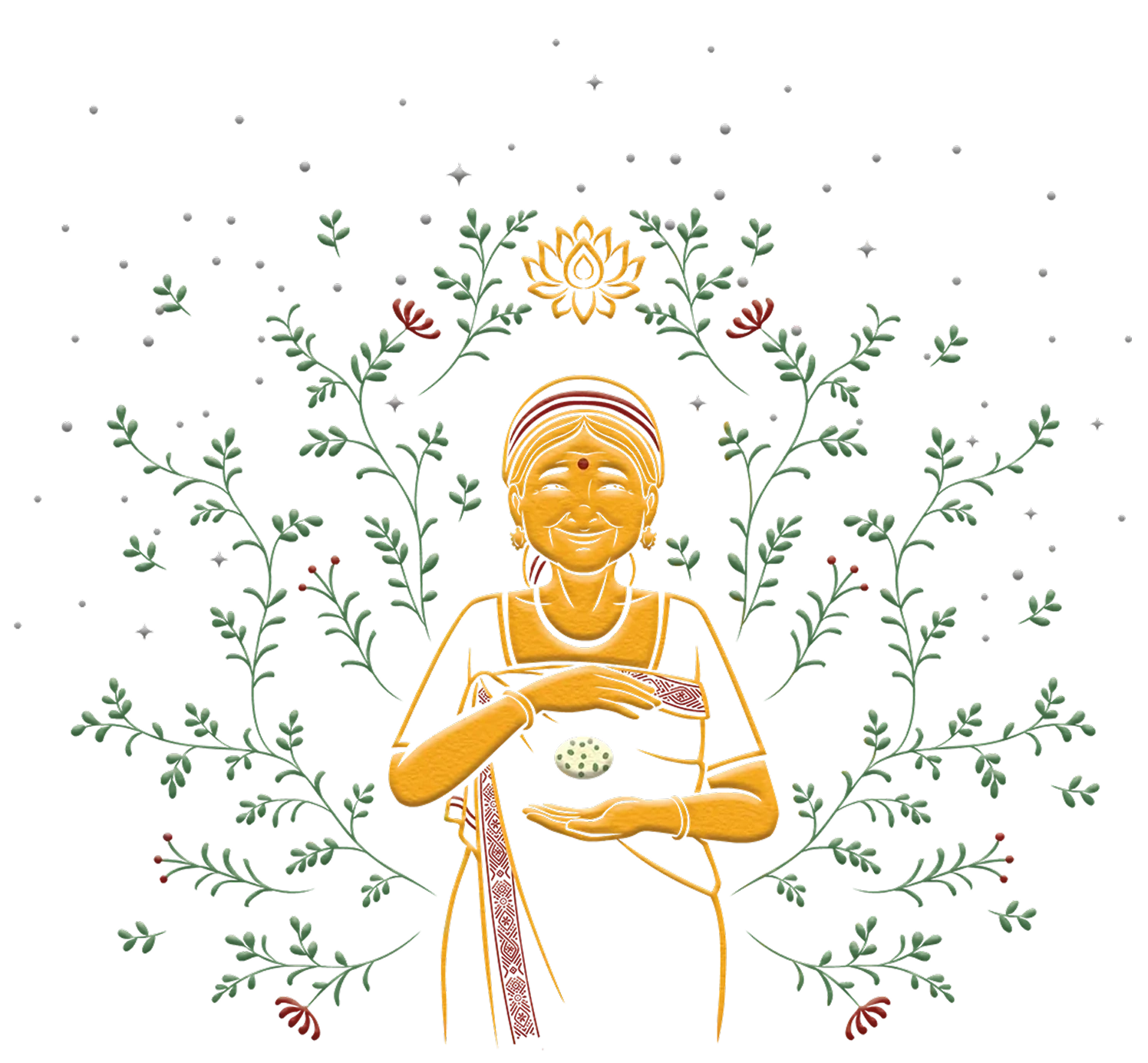
The botanicals are dried, ground, and combined with rice flour to form e-pob, the traditional starter cake.
This starter does not impose flavor. It invites fermentation — recruiting native yeasts and microbes specific to this place.
FIRE, RICEand the restraint
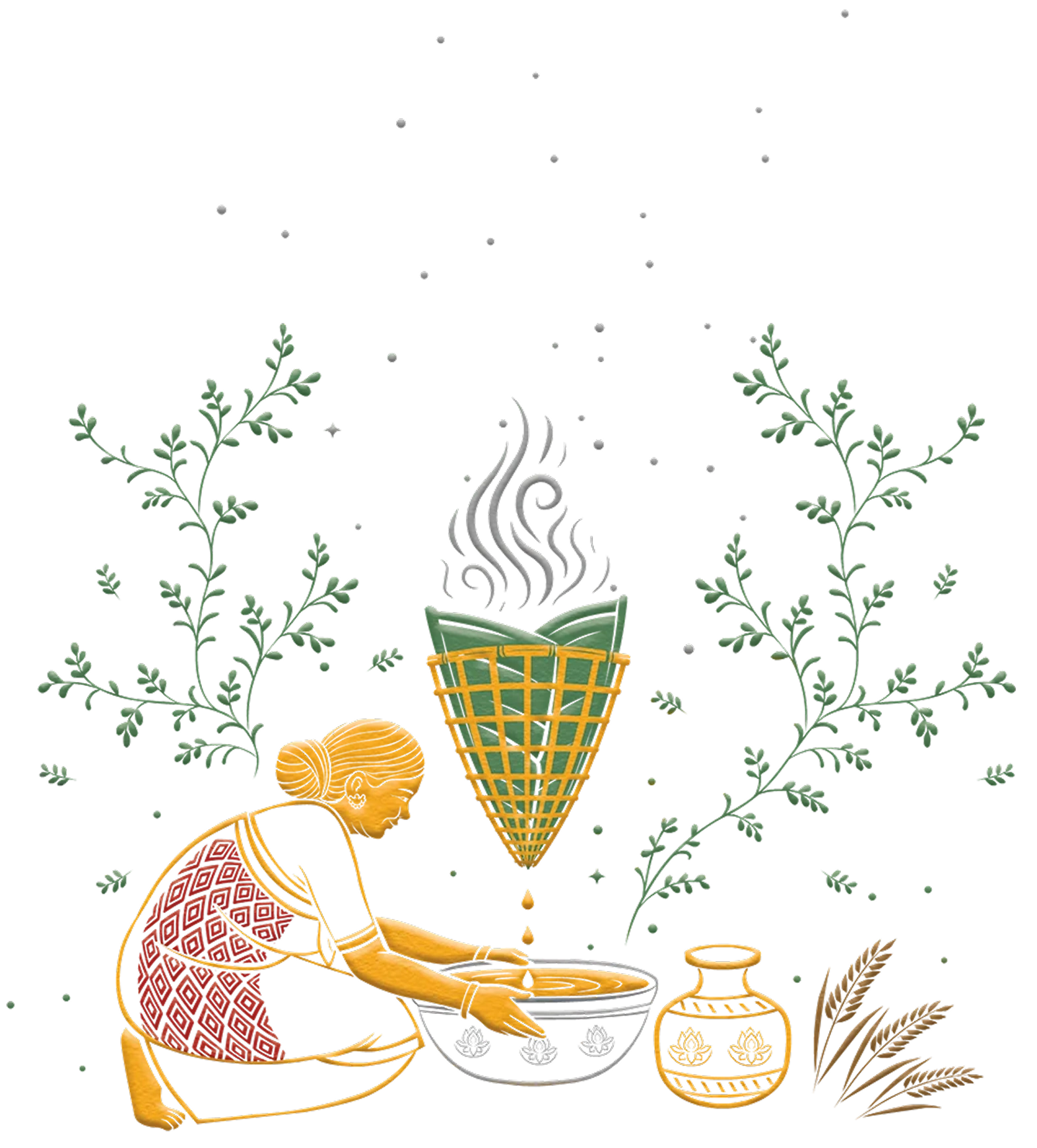
Before fermentation, rice husk is burned to a precise point — ember-brown, never carbonized. This is not ritual for symbolism; it is technical discipline. Too much burn overwhelms the wine. Too little leaves it incomplete.
Steamed rice is combined with the starter cake and smoked husk in proportions set by the brewmaster. From this moment onward, the process is left largely undisturbed.
Control gives way to observation.

Grain BoundaryFermentation
“Every grain becomes its own cellar.”
Coated first with Epob, then with finely burnt husk, each grain of rice turns into a micro chamber of fermentation. But the true magic lies at the boundary — not within the grain, not outside it, but at the delicate meeting line where rice, starter, and husk touch.
At this razor-thin interface, alcohol is born droplet by droplet, giving Po:ro Apong its rare depth, texture, and character.
A RARE SOLID-STATEFermentation
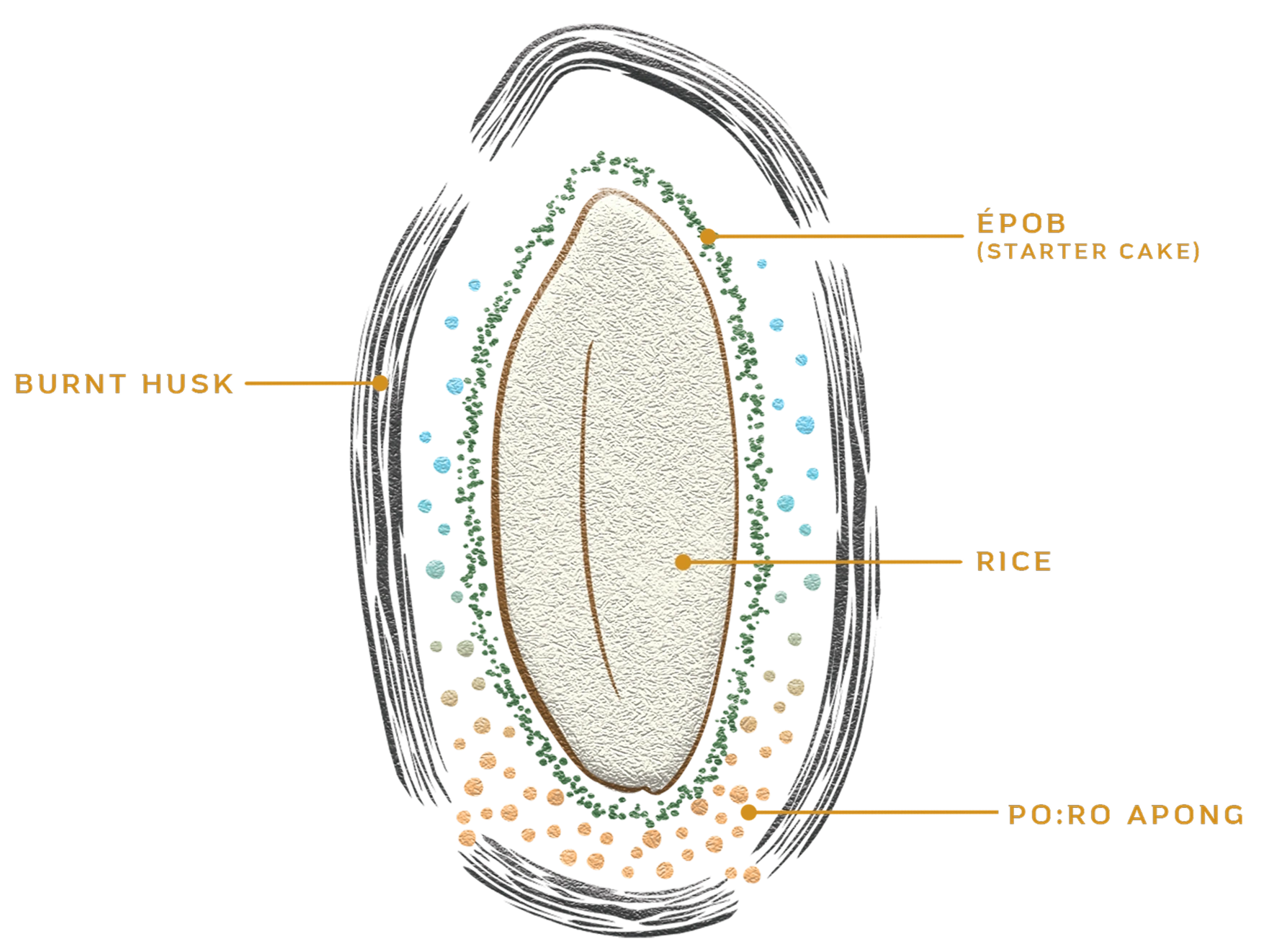
Po:ro Apong ferments in solid state, not liquid.
Fermentation takes place in small batches, typically 5 to 7 kilograms, allowing close attention rather than mechanical intervention.
The ferment beds are not stirred or corrected. The brewmasters monitor progress by sight, scent, and time. Intervention is rare, and only when necessary.
This process resists massive scale by design.
It depends on judgment rather than automation, and on time rather than speed.
The Drawing
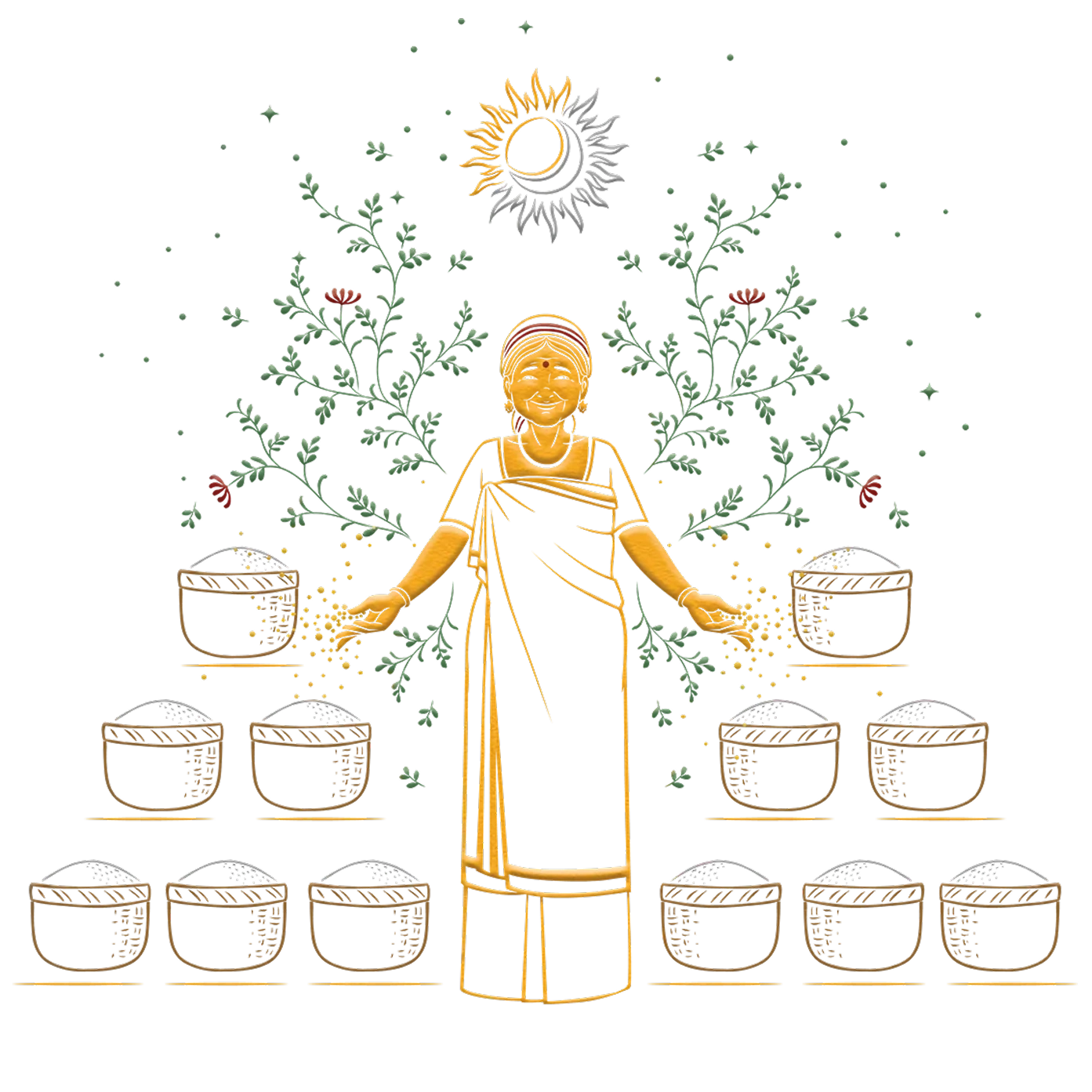
In the traditional method, when fermentation is complete, the wine is gently drawn from the grain. What emerges reflects the forest, the season, and the decisions made during that cycle.
Each batch is distinct. Variation is not corrected; it is accepted as truth.
This is not an inconsistency.
This is nature.
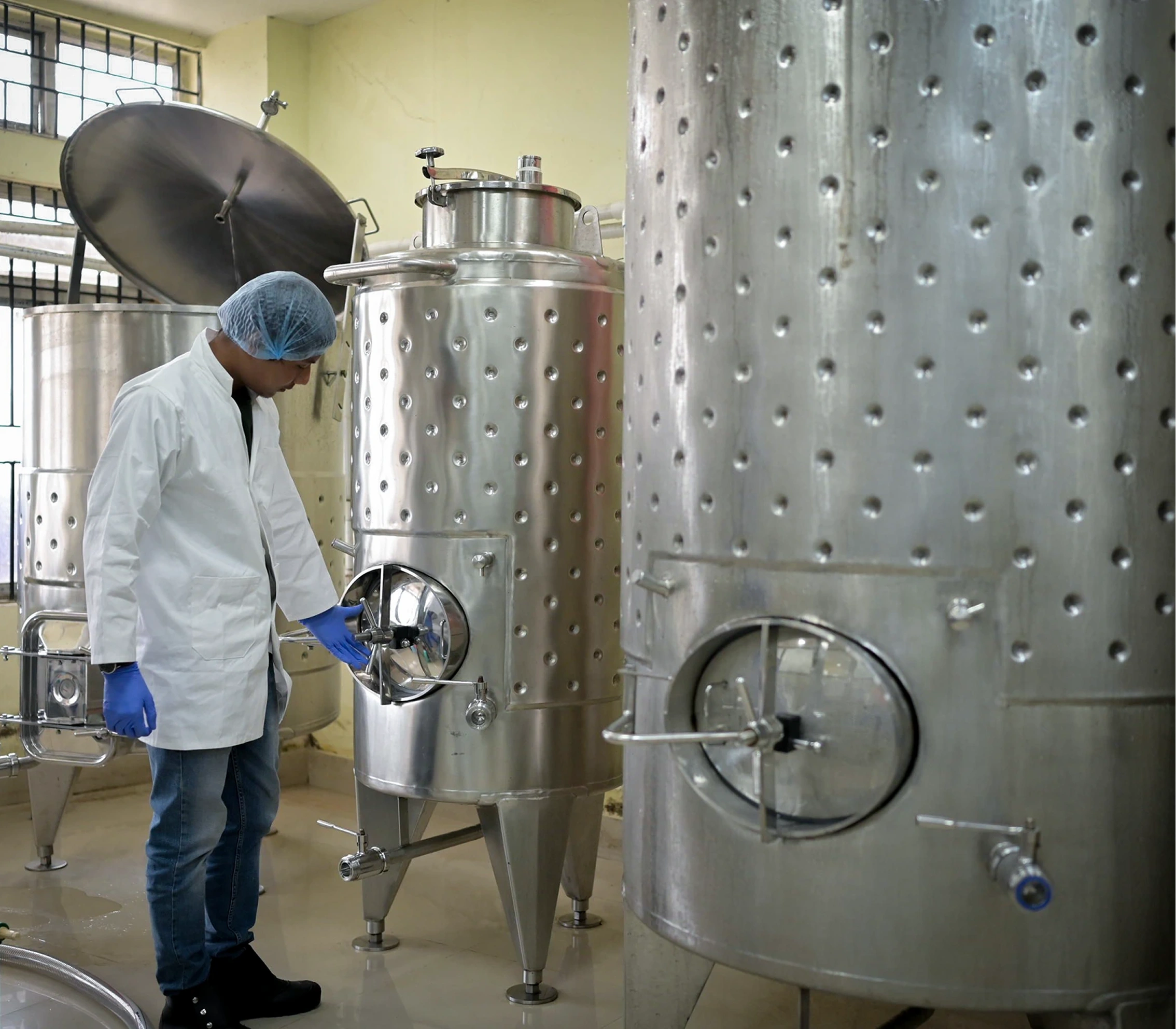
Technology is the valet,not the star.
Tipo did not reinterpret
Po:ro Apong.
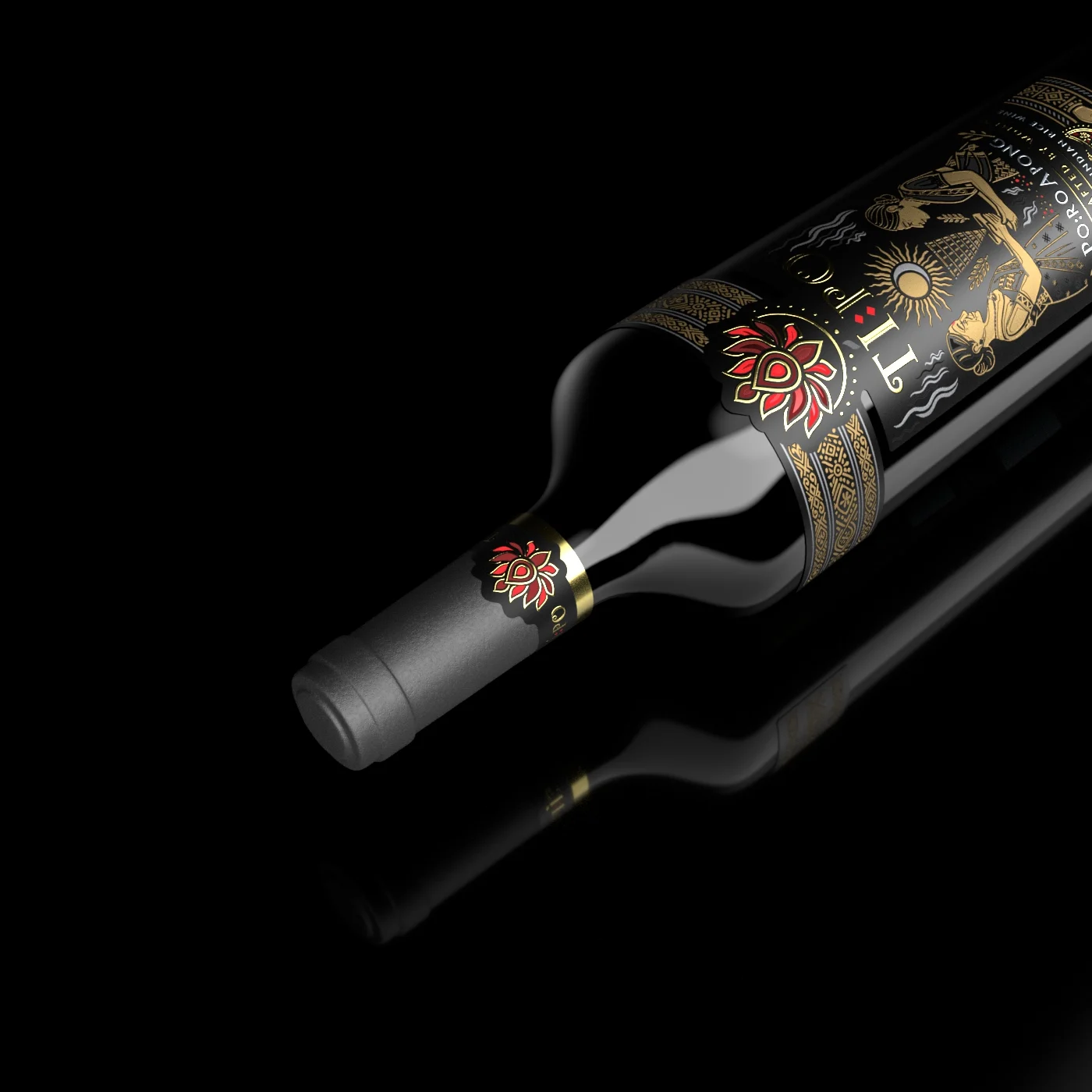
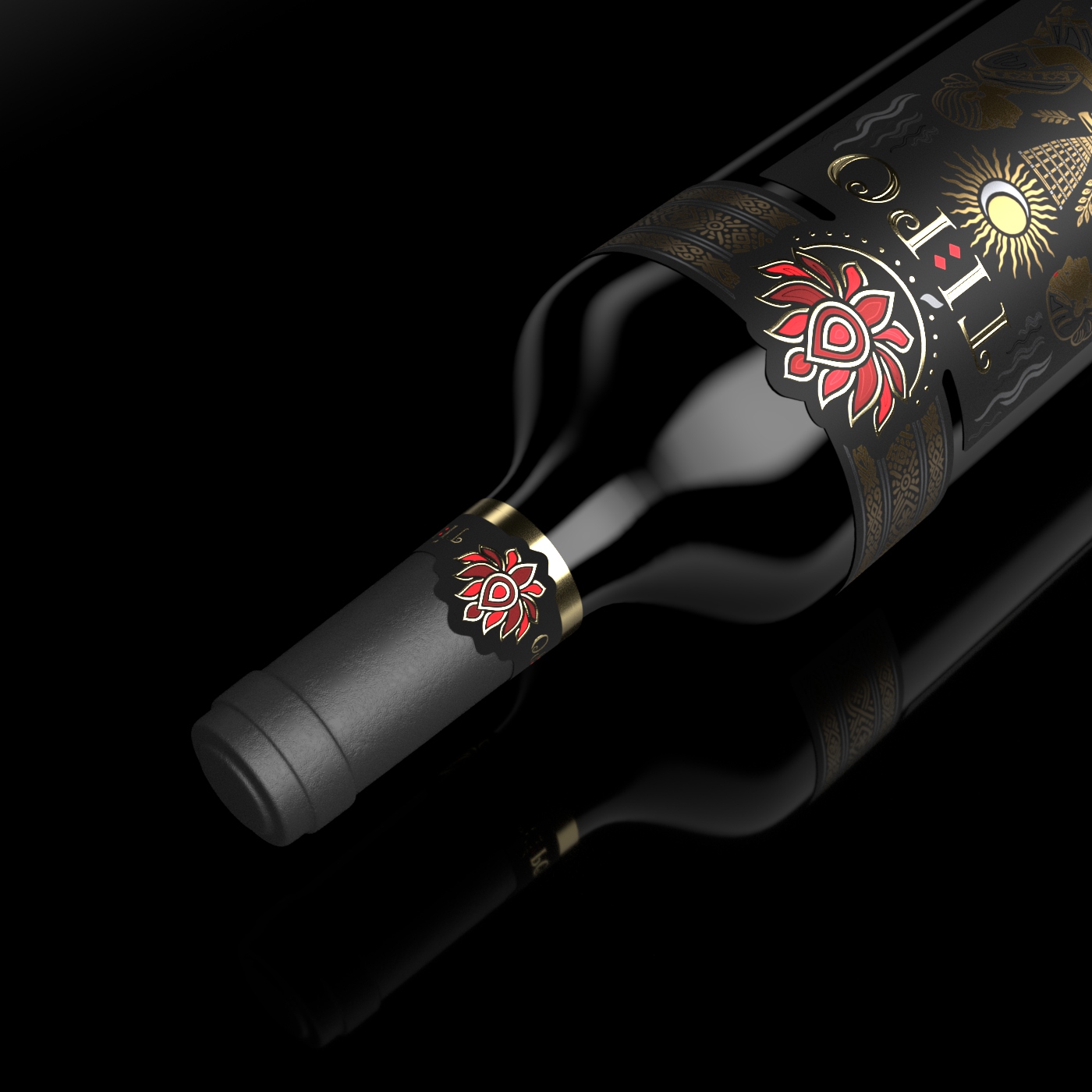
Our role is deliberately modest: introduce hygiene, scientific filtration, and clean bottling in modern winery setting so the Po:ro Apong can travel without altering its character.
This quiet preservation is overseen by Ajoy Shaw, DipWSET, our Chief Winemaker, ensuring what reaches you is what was made at the source: the Brahmaputra Valley, kept pristine in glass.
It takes a village,they say!
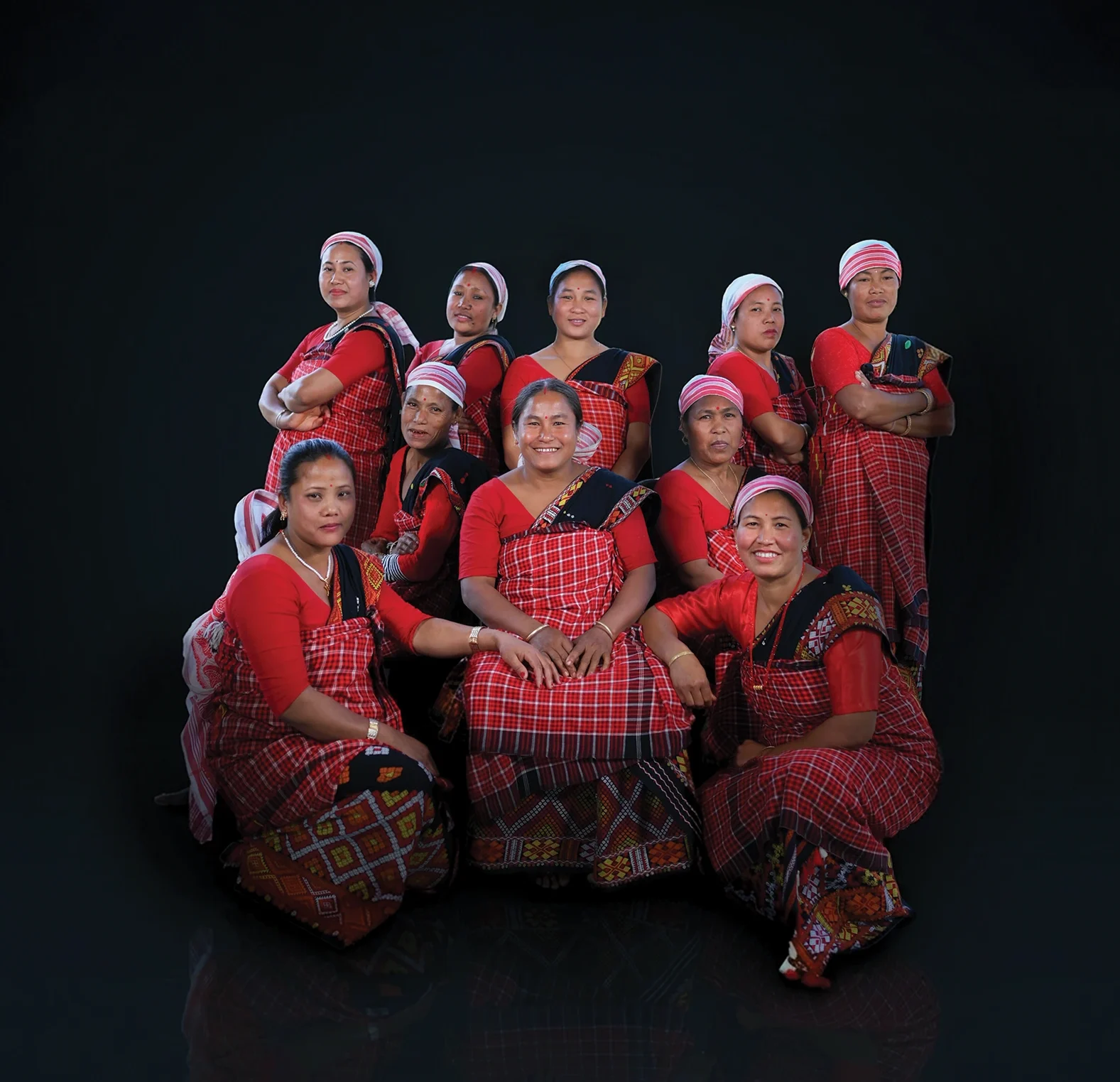
Po:ro Apong is made by women, and it has always been so. Knowledge is passed through apprenticeship, not instruction. Girls grow up assisting long before they are trusted to decide. Years are spent observing, repeating, correcting, and waiting.
Authority is not granted; it is recognized.
The role of the brewmaster is earned through time, judgment, and restraint. What exists is a lineage — a continuous chain of women who carry the responsibility of brewing the Po:ro Apong, season after season.
This structure has preserved the craft not by freezing it in time, but by keeping it human.
Value livesin the system
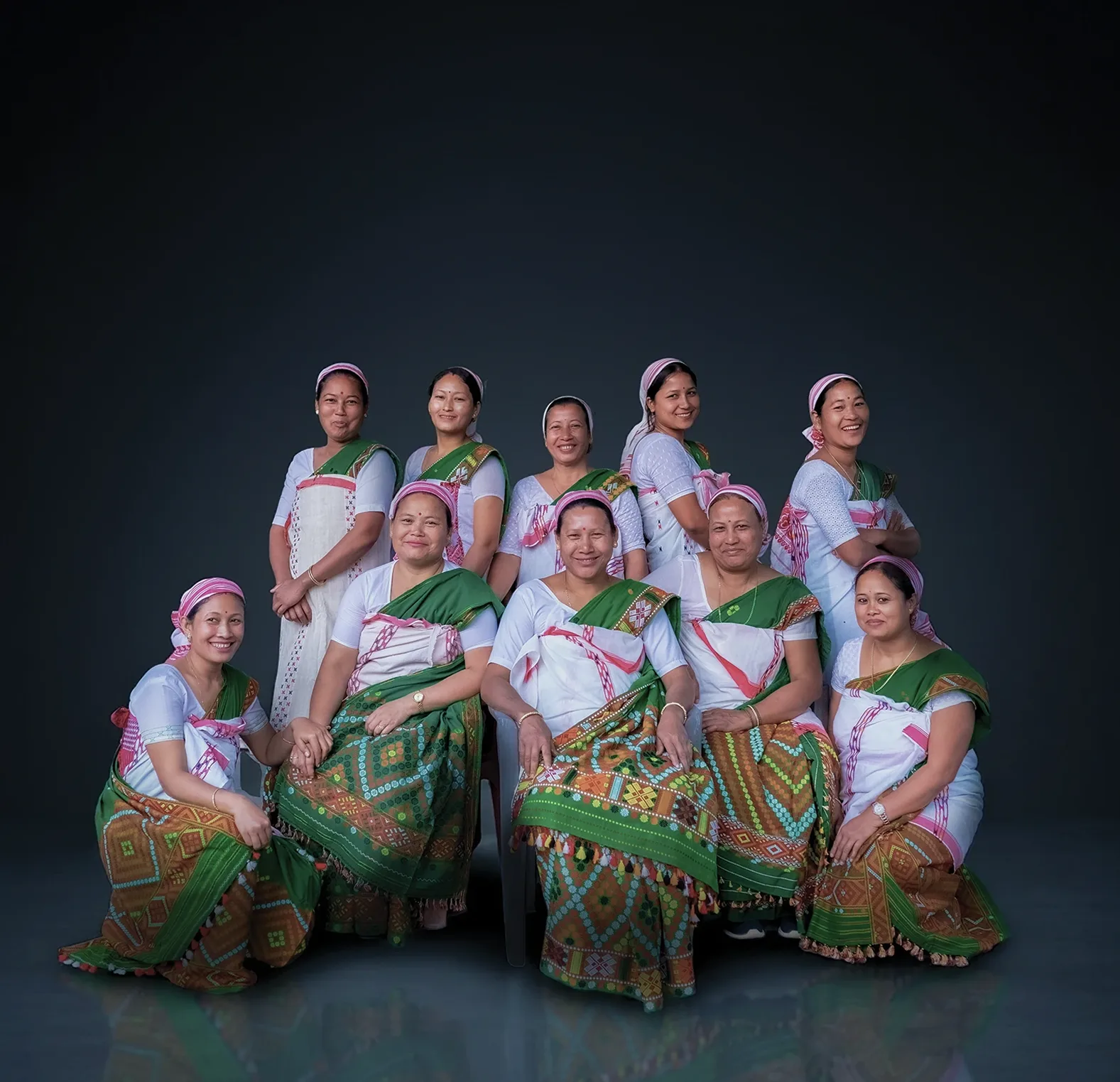
Tipo rests on seasonal botanicals, forest judgment, and women trained through long apprenticeship — a living system that cannot be rushed or flattened.
To keep it intact, we spent two years selecting and partnering with two Self Help Groups: Polo SHG (Leimekuri) and Aaradha SHG (Memberchuk), who are now part of the supply chain.
The tradition stays with its rightful owners: the women brewmasters remain in control; we didn't outsource heritage, we safeguarded it.
WelcomeTiPo's Po:Ro Apongto your world
Every culture has a fermentation that is unique to them.
Japan has Saké, Korea has Soju, Europe has Wine.
India has Po:Ro Apong.